Differences Between Glass Wool and Rock Wool
adsfad
Differences Between Glass Wool and Rock Wool
Glass wool and rock wool stand as two of the most commonly applied fibrous insulation materials in construction and industry, yet they hold obvious distinctions in raw material selection, production craft, physical properties and practical usage scenarios.
Glass wool is manufactured by melting glass, quartz sand and other inorganic mineral raw materials at high temperatures, then drawing them into slender and flexible fibers. It features light weight and soft texture, bringing great convenience to on-site installation. With a density usually ranging from 24kg/m³ to 96kg/m³, it performs well in thermal insulation and sound absorption, which makes it widely applied in indoor decoration, HVAC duct insulation, light steel structure buildings and acoustic noise reduction projects. Nevertheless, its heat resistance is limited, with a safe operating temperature between 200°C and 250°C, so it cannot adapt to working conditions with excessive temperature.
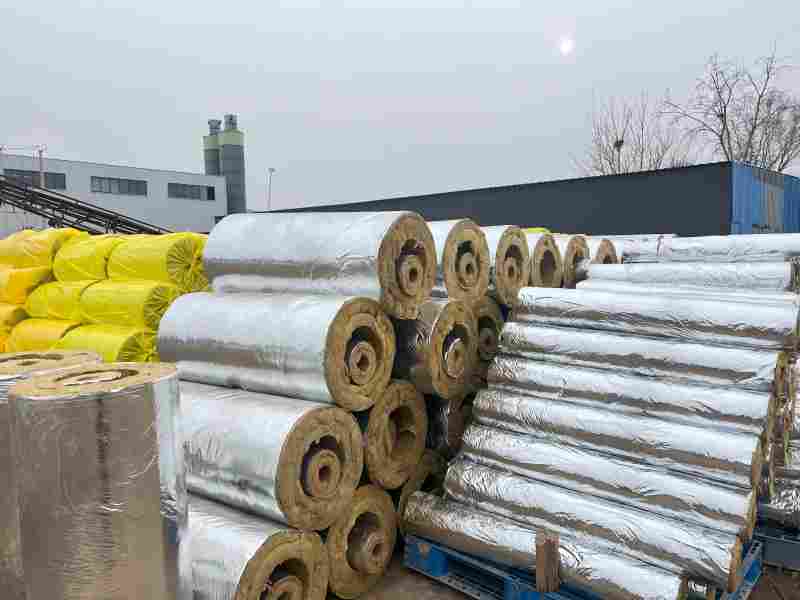
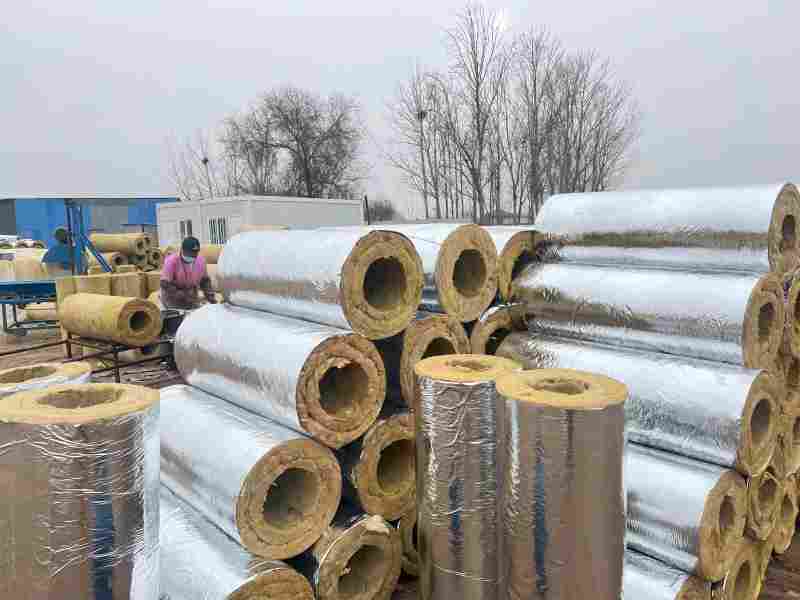
Rock wool, also called basalt wool, takes natural basalt, dolomite and other volcanic rocks as main raw materials, which are melted at a high temperature over 1400°C during production. It has higher density and higher hardness, with stronger mechanical strength and better stability. Its high-temperature resistance is far more outstanding, able to work safely at temperatures up to 600°C or even higher, giving it superior fireproof and high-temperature insulation effects. Therefore, rock wool is often used in industrial equipment insulation, petrochemical engineering, building exterior wall thermal insulation, fireproof boards and fire barrier zones.
In terms of cost, glass wool is more affordable and cost-effective for daily civil construction projects. Rock wool costs more but provides longer service life and higher safety performance. In installation, glass wool is milder and causes less irritation to human skin, while rock wool is stiffer and usually requires protective gear for construction workers.
To put it simply, glass wool is the first choice for conventional projects that need light weight, sound absorption and normal temperature insulation. Rock wool is more suitable for industrial and construction fields that prioritize fire resistance, high temperature resistance and safety requirements.